
A residual current device (RCD), or what we commonly call a ‘safety switch’ here in Australia, is an absolute lifesaver. This clever device is designed to do one thing exceptionally well: prevent fatal electric shocks. It works by keeping a constant watch on the electricity flowing through a circuit, and if it senses a dangerous fault, it cuts the power instantly.
That rapid response, often in less than 30 milliseconds, is what protects you and your family from electrocution if you accidentally touch a faulty appliance or a live wire. Understanding what is a residual current device is a critical part of home safety for every Queenslander.
For professional help, our team provides safety switch installation in Brisbane.
The Unseen Guardian in Your Switchboard
Think of your home’s wiring like a closed-loop plumbing system. An RCD is like an incredibly fast, super-smart safety valve on that system. Its one and only job is to make sure the electrical current flowing in to a circuit is the exact same as the current flowing out. Everything has to be perfectly balanced.
The moment it detects even the tiniest imbalance—a clear sign that electricity is leaking out and potentially flowing through a person—it shuts off the power in a heartbeat. This is why understanding what a residual current device is isn’t just for electricians; it’s crucial for every Brisbane homeowner. It’s not just another switch in your switchboard; it’s an active guardian.
How RCDs Differ from Circuit Breakers
It’s really easy to get RCDs and circuit breakers confused, but they have two very different, and equally important, jobs. We like to think of them as two specialist security guards for your home’s electrical system.
- A circuit breaker protects your property. Its job is to trip and cut the power when it senses an overload (like running the air con, kettle, and microwave all at once) or a major short circuit. This is what stops wires from overheating and causing a fire.
- An RCD protects people. It’s specifically built to detect the tiny, dangerous trickles of current that can pass through a person’s body to the ground. A standard circuit breaker isn’t nearly sensitive enough to pick up on this kind of fault.
A modern, safe switchboard needs both to be fully compliant and, more importantly, to keep everyone safe. The circuit breaker protects your home, while the RCD protects your family. You can get a better feel for these issues by reading about common electrical faults in Brisbane homes.
To put it simply, a circuit breaker is for protecting your wiring and appliances from damage. An RCD is for saving your life from electric shock.
This difference is absolutely critical, especially here in South East Queensland where our lifestyle involves plenty of outdoor power points, pool pumps, and backyard sheds.
For example, imagine you’ve got a home in Redcliffe, and the salty coastal air has caused a bit of corrosion on an outdoor light fitting. An RCD would detect the tiny current leakage caused by moisture and trip immediately, stopping a potential shock hazard long before a circuit breaker would even notice. This is exactly why RCDs are a legal requirement in Queensland for all new homes, properties being sold or rented, and whenever new power circuits are installed.
How Your RCD Protects You From Electric Shock
So, how does an RCD actually do its job? Think of it like a finely tuned set of scales, keeping a constant watch over your electrical circuit. On one side of the scale, you have the electricity flowing into an appliance through the ‘active’ wire. On the other, you have the current flowing back out through the ‘neutral’ wire.
As long as everything is working correctly, these two currents are perfectly equal. The RCD’s one and only job is to monitor this balance, millisecond by millisecond. If the current going in matches the current coming out, the RCD stays quiet and your power stays on. Simple as that.
The Trip That Saves Your Life
The real magic happens when that perfect balance is thrown off. This imbalance is what we call a ‘leakage current’ or ‘residual current’. It’s a huge red flag that electricity has found a shortcut to the ground—and that shortcut could be right through a person.
Let’s say you’re in your Logan home, about to make some toast, but the toaster has a frayed cord you haven’t noticed. The moment you touch the faulty metal casing, a small amount of current can ‘leak’ from the circuit and travel through your body to the earth.
Instantly, an imbalance is created. Less current is returning through the neutral wire than what went in through the active one.
In that split second, the RCD detects this dangerous difference and trips, shutting off the power in less than 30 milliseconds. That’s faster than a single heartbeat and quick enough to stop a potentially fatal electric shock in its tracks.
This incredibly rapid response is what makes an RCD a life-saving device, not just something that protects your appliances. It’s designed to spot dangers that a standard circuit breaker wouldn’t even notice.
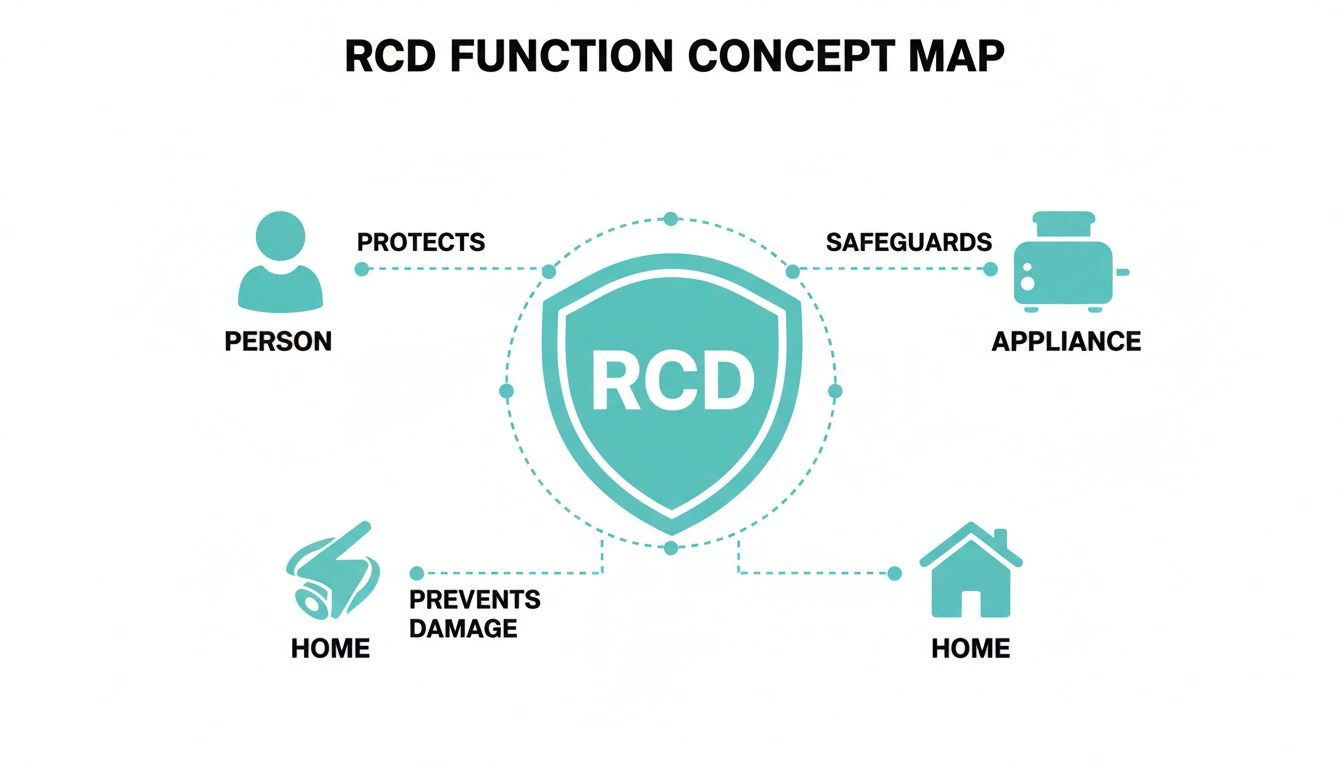
As you can see, the RCD acts as a central guardian. It’s there to shield people from direct contact faults, protect appliances from damaging electrical surges, and ultimately safeguard your entire home.
The 30 Milliamp Human Safety Threshold
The sensitivity of an RCD isn’t random; it’s meticulously calibrated for human safety. Here in Australia, the standards (AS/NZS 3000) are very clear: RCDs used for personal protection in our homes must have a tripping threshold of 30 milliamps (mA).
So, why that specific number? Extensive research shows that electrical currents passing through the body above 30mA can cause ventricular fibrillation (where the heart’s rhythm is dangerously disrupted) and stop a person from breathing. The RCD is engineered to cut the power long before the current ever reaches that lethal level, giving you a critical safety buffer. It’s also important to manage how many devices you’re using at once; for more on this, check out our guide on the safe use of electrical power boards.
This is where an RCD is fundamentally different from a circuit breaker. A circuit breaker might be rated for 16 amps (16,000 mA) and is there to stop wires from overheating during a major fault or overload. An RCD, on the other hand, is built to detect the tiny, life-threatening currents a circuit breaker is completely blind to. It’s an essential layer of personal protection that every South East Queensland home needs.
Getting to Know RCD Types and the New Rules
Just like you wouldn’t use a hammer to fix a leaky tap, you need the right tool for the job when it comes to electrical safety. Not all residual current devices are created equal, and this is a really important point to grasp, especially as our homes across Brisbane—from Ipswich out to the Redlands—are now packed with modern electronics.
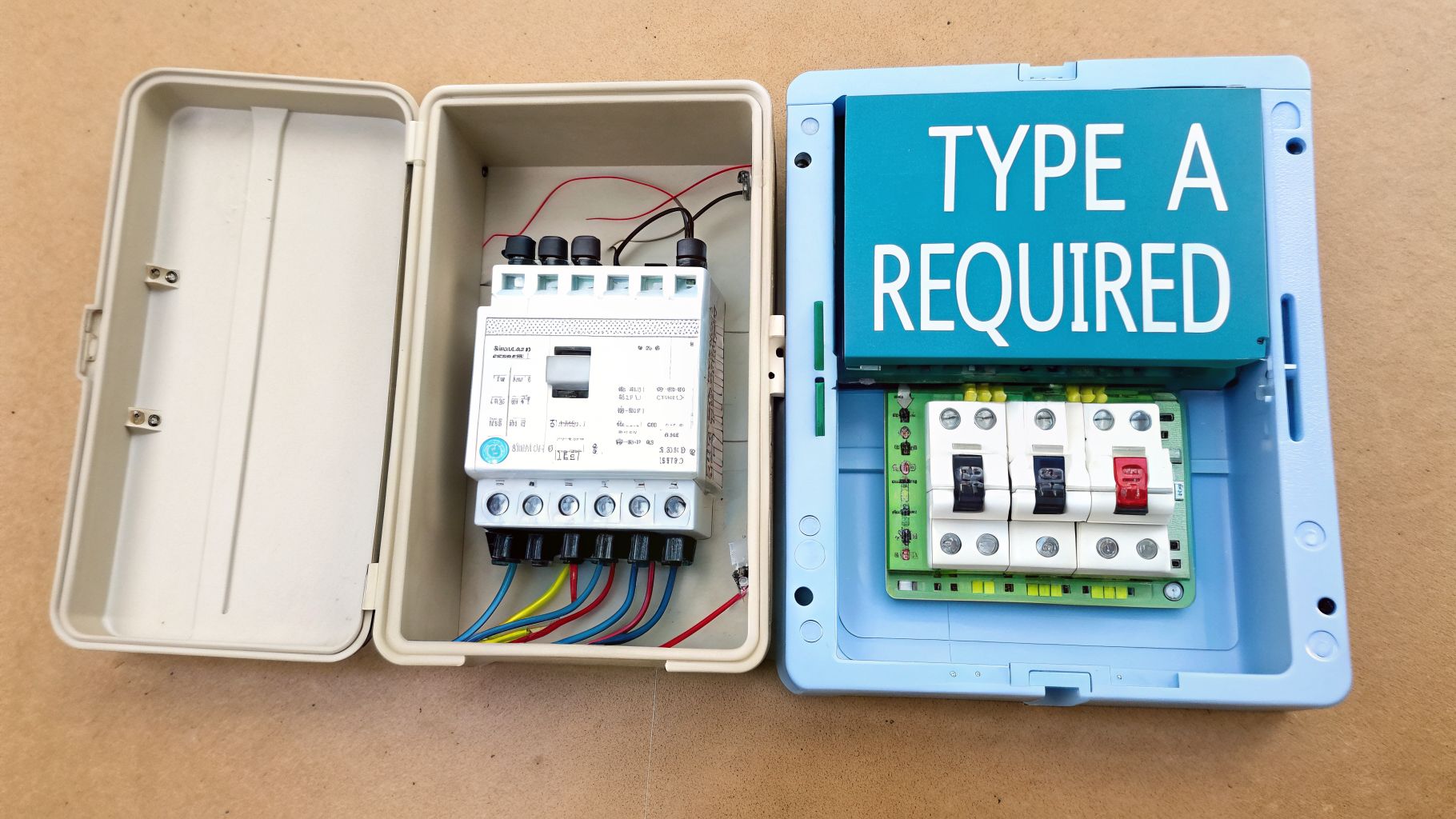
The two main types you’ll come across in a residential setting are Type AC and Type A. You can think of Type AC as the original model, designed way back when our electrical loads were much simpler. It did its job perfectly for its time, but technology has sprinted ahead since then.
Why Type A RCDs Are Now the Standard
Today’s appliances are a world away from the simple devices of the past. Your washing machine, dishwasher, air conditioner, and especially your solar inverter or electric vehicle (EV) charger are all loaded with sophisticated electronics. These can create types of electrical fault currents that an old Type AC RCD simply wasn’t designed to see.
This is where the Type A RCD comes in. It’s the modern, smarter version, built to protect you from both the standard alternating current (AC) faults and the pulsating direct current (DC) faults that today’s electronics can produce. That makes it the only sensible and safe choice for a modern home.
Here’s why this is so critical for you:
- Solar Power: Queensland has one of the highest rates of solar adoption in the world. Your solar inverter, which converts DC power from your panels into AC power for your home, absolutely requires a Type A RCD for safe operation.
- Modern Appliances: Gadgets with variable speed motors or electronic controls, like most new air conditioners and washing machines, need the advanced protection only a Type A RCD can offer.
- EV Chargers: If you’re installing an EV charger at your property in Moreton Bay or Logan, the job demands a Type A RCD to handle the unique electrical signature of the charger.
Here’s the scary part: a Type AC RCD can be “blinded” or fail to trip when these modern fault currents are present, leaving you and your family completely unprotected. It’s a huge safety risk, and one that has triggered some major changes in the rules.
The Nationwide Ban on Old Type AC RCDs
Recognising this critical safety gap, regulators took decisive action across Australia. In a major move, a blanket ban on installing old Type AC RCDs came into effect on 30/04/2023. This ruling, which followed updates to the AS/NZS 3000 Wiring Rules, means it is now illegal for any licensed electrician to install a Type AC RCD in any new electrical work. You can find out more by checking out the official guidance on Residual Current Device compliance rules.
This isn’t just a minor tweak to the rulebook; it’s a fundamental shift to make sure our electrical safety standards can keep up with the technology we rely on every day. If you live in an older Brisbane home that still has Type AC safety switches, it may no longer be adequately protected for the appliances you’ve bought in the last few years.
The key takeaway: If you’re doing any electrical work—whether it’s adding a new power point, upgrading your switchboard, or installing solar—your electrician is legally required to install Type A RCDs. Using any other type for new work is non-compliant, unsafe, and against the law.
This change is a fantastic, proactive step to ensure your home’s safety net is strong enough for the 21st century. Bringing your home up to current standards with these kinds of electrical updates can do more than just improve safety; you can also boost your Brisbane property’s market value with key electrical upgrades. At the end of the day, this nationwide rule change highlights just how vital it is to work with a licensed electrician who keeps up-to-date with guidance from the Electrical Safety Office (ESO).
Your Legal Electrical Safety Obligations in Queensland
When it comes to the wiring in your Queensland home, knowing your legal responsibilities isn’t just a good idea—it’s mandatory. The rules are crystal clear and exist for one simple reason: to save lives. Both the Electrical Safety Act 2002 and the national AS/NZS 3000 Wiring Rules set out non-negotiable requirements for where and when RCDs must be installed.
This isn’t really about dodging fines from the Electrical Safety Office (ESO) or the Queensland Building and Construction Commission (QBCC), though that’s certainly part of it. At its heart, this is about your fundamental duty of care to your family, tenants, or anyone who sets foot on your property. These laws were written to stop preventable tragedies before they happen.
When Are RCDs Mandatory in Queensland?
The rules are straightforward and cover several common scenarios that property owners across South East Queensland will face. You are legally required to have RCDs fitted by a licensed electrician if:
- You’re building a new home: Every single new home built in Queensland, whether it’s in a new Ipswich estate or a custom build in Redcliffe, must have RCD protection on all power and lighting circuits from day one.
- You’re adding new circuits: Putting in a new power point for the home office? Installing an air conditioner? Any new circuit you add must be protected by its own RCD.
- You’re a landlord: Landlords have a strict legal obligation. Every circuit in a rental property must be protected by an RCD. This has been the standard for some time and is a critical safety net for tenants.
- You’re selling your property: Before you can sell your home, you must have RCDs installed on all power circuits. This requirement protects the new owners and ensures the property meets a minimum safety benchmark.
Consider this scenario: you own a classic 1980s brick home in Carindale and you’re getting ready to sell. Even if your switchboard has been rock-solid for years, the law says you must get a licensed electrician to install RCDs on all your power point circuits before the sale can go through.
The Life-Saving Reason Behind the Law
These regulations are a direct response to preventable deaths and serious injuries. The government has progressively tightened these laws because the data showed that, historically, electrical accidents in Aussie homes were responsible for killing 15 people and hospitalising 300 more each year. You can learn more about the positive impact of these changes by reading the history of RCD safety standards in Australia.
The legal mandate for RCDs with a trip threshold of 30 mA for all household circuits is specifically designed to cut the power before a dangerous current can cause a fatal electric shock.
Warning: All RCD Installation is Work for Licensed Professionals Only.
Never, under any circumstances, should you try to install an RCD yourself. In Queensland, all electrical work is strictly reserved for licensed electrical contractors. DIY electrical work is not only incredibly dangerous but also illegal. It can lead to massive fines, void your home insurance, and have tragic personal consequences.
Your Duty of Care as a Property Owner
Whether you’re a landlord with a rental in Coorparoo or a homeowner in Paddington, the law views electrical safety as your responsibility.
For landlords, this means making sure your rental property is compliant before a new tenant moves in and stays that way. It’s a duty of care you can’t delegate. For homeowners, it’s about keeping your family and visitors safe, and it becomes a legal necessity when you sell or renovate. Embracing these rules means recognising that a modern, compliant switchboard with full RCD protection is the single most important safety feature in your entire home.
How to Test and Maintain Your RCDs
An RCD is a mechanical device, and just like your car or any other piece of safety equipment, it needs a quick check-up every now and then to make sure it’s ready to do its job when you need it most.
Testing your RCDs is a simple but vital task you can do yourself in less than a minute. We like to think of it as a fire drill for your home’s electrical safety system—a quick practice run to ensure everything is in working order.
We recommend giving your RCDs a test every six months. A great trick to remember is to tie it in with another regular task, like changing your clocks at the start and end of daylight saving or when you test your smoke alarms. This simple habit ensures the sensitive internal mechanism is moving freely and ready to trip in an instant.
The Simple Push-Button Test
Testing your RCD is completely safe and surprisingly easy. All you need to do is head to your switchboard and follow these quick steps:
- Find Your RCDs: Look for the switches that have a small button, usually marked with a ‘T’ or ‘Test’.
- Press the Test Button: Give the test button on each RCD a firm press, one at a time.
- Check the Result: You should hear a solid “click” as the switch immediately flicks to the ‘OFF’ position. That sound tells you the trip mechanism is working perfectly.
- Reset the RCD: Once you’ve seen it trip, just flip the switch back to the ‘ON’ position to get the power back to that circuit.
What if it doesn’t trip? If you press the test button and nothing happens, your RCD is faulty and will not protect you from a serious electric shock. It’s crucial to have it replaced by a licensed electrician as soon as possible. This isn’t a job to put off; your safety is at risk until it’s fixed.
Understanding Nuisance Tripping
Sometimes, an RCD might trip when there isn’t an immediate, life-threatening fault. We call this ‘nuisance tripping’, and while it can be frustrating, it’s usually a sign that your RCD is doing its job by detecting a small, persistent issue somewhere in your system.
Here in South East Queensland, there are a few usual suspects:
- A Faulty Appliance: An older fridge, a well-used kettle, or a washing machine could be developing a minor internal fault. This can cause a tiny leakage of current to earth that’s just enough for the RCD to pick up on. Try unplugging your appliances one by one to see if you can find the culprit.
- Moisture and Humidity: Brisbane’s famous subtropical humidity can be a real headache for electrical systems. Moisture can creep into outdoor power points, light fittings, or even extension cords, creating the exact kind of small current leak an RCD is designed to detect.
- Accumulated Leakage: It’s also possible for lots of appliances, each with a tiny, perfectly normal leakage current, to add up. When they’re all running at once, their combined leakage can be just enough to cross the RCD’s 30mA threshold and cause a trip.
If your RCD keeps tripping and you can’t track down an obvious cause, it’s a clear signal to call in a professional. Persistent tripping can point to a more serious problem with your home’s wiring that requires an expert diagnosis. You can learn more in our guide to the most common electrical problems in Brisbane homes. A licensed sparky has the proper test equipment to trace the fault safely and get your power back on for good.
When You Must Call a Licensed Electrician for RCDs
While hitting the test button on your RCDs is a great bit of home maintenance, that’s where your DIY duties come to a hard stop. When it involves anything more complex with your RCDs or switchboard, Queensland’s laws are crystal clear: all electrical work must be carried out by a licensed contractor. It’s not just illegal to do it yourself—it’s incredibly dangerous. It’s simply not worth the risk.
Knowing when to pick up the phone and call a professional is what keeps your home safe and compliant. There are several clear-cut scenarios where an expert eye isn’t just a good idea, it’s absolutely essential.
Clear Signs You Need a Professional
Some situations are more than just a simple glitch; they point to an underlying problem that requires professional tools and experience to solve. Don’t hesitate to call us if you notice any of these red flags.
- Your RCD Fails the Test: You press the ‘T’ button, but the switch doesn’t trip. This means the device is faulty and giving you zero protection. It needs to be replaced immediately.
- The RCD Won’t Reset: If a safety switch trips and then refuses to flick back to the ‘ON’ position, it’s often screaming that there’s a serious fault on that circuit that needs to be found and fixed.
- Persistent Nuisance Tripping: You’ve unplugged every appliance you can think of, but the RCD still trips constantly. This usually points to a deeper wiring issue that only a licensed electrician can safely diagnose.
These aren’t minor annoyances—they’re your electrical system’s warning signs. For a deeper dive, you can also explore our guide on essential electrical repairs and your local Brisbane electrician.
Upgrading Your Home and Lifestyle
As your life changes, your electrical needs grow. Your RCD setup has to keep pace, and that means calling in a licensed electrician for any planned upgrades.
Consider this common scenario: you own a lovely pre-2000 weatherboard home in Redcliffe with an old ceramic fuse box and no safety switches. Not only is this a compliance nightmare if you want to sell or rent, but it’s a genuine fire and shock hazard, especially with the salt air from the coast causing corrosion. A licensed sparkie will need to perform a full switchboard upgrade, which includes installing modern Type A RCDs on all your power and light circuits.
Likewise, if you’re getting a solar power system or an EV charger installed, the work legally requires a professional. They’ll know the specific RCD requirements for these modern technologies and ensure your switchboard can handle the extra load—especially during a hot Ipswich summer when the air conditioners are blasting.
The global market for RCDs is growing fast, projected to jump from $3.8 billion in 2023 to $6.3 billion by 2032. This isn’t just a random trend; it’s driven by stricter electrical safety regulations worldwide. For Brisbane homeowners, this means we have access to better, more reliable RCD technology installed by qualified professionals who are on top of their game. You can discover more about the growing RCD market on dataintelo.com.
Frequently Asked Questions About RCDs
We get a lot of questions about RCDs from homeowners across Brisbane, so we’ve put together answers to some of the most common ones. Getting your head around what a residual current device is and how it actually works is the first step to making sure your home is electrically safe.
What Is the Difference Between an RCD and a Safety Switch?
You’ll hear sparkies use both terms, but in Australia, they mean exactly the same thing. ‘Safety switch’ is simply the common name for a Residual Current Device (RCD).
So, if your electrician is talking about installing a new safety switch, they’re referring to the very same life-saving device we’ve been discussing.
My Brisbane House Was Built in the 90s. Do I Need RCDs?
It’s very likely you need an upgrade. While some homes built in the 1990s had safety switches on their power circuits, protection for lighting circuits often wasn’t required back then.
Here’s the crucial part: under Queensland law, if you plan to sell your home, rent it out, or even just add a single new power point, you are legally required to have RCDs protecting all relevant circuits.
For complete peace of mind, we always recommend getting a licensed electrician to inspect your switchboard. It’s the only way to know for sure if your home meets today’s safety standards.
Our advice: For any house built before the early 2000s, it’s safest to assume your RCD protection is incomplete until a licensed professional tells you otherwise. It’s a simple check that ensures your family’s safety.
How Much Does It Cost to Install an RCD in Queensland?
The cost can vary quite a bit. A straightforward installation of a single RCD might start from a couple of hundred dollars. However, the final price really depends on the age and condition of your switchboard.
If your board is old, rusty, or just plain full, a more involved upgrade will be necessary, which naturally increases the cost.
Because every home is different, the best approach is to get a fixed-price quote from a licensed electrician. They can pop out, assess your specific setup in Brisbane, Ipswich, or the Redlands, and give you a clear, upfront price with no surprises.
Can I Install an RCD Myself?
No, absolutely not. In Queensland, it is illegal and extremely dangerous for anyone other than a licensed electrical contractor to perform any electrical work. This includes installing or replacing a safety switch.
Attempting DIY electrical work can lead to severe injury, death, house fires, and it will almost certainly void your home insurance. The Electrical Safety Office (ESO) can also hit you with significant fines for unlicensed work. This is one job you must leave to the professionals.
If you have more questions or need a professional to inspect your switchboard, the team at AdVoltage Electrical is here to help. We provide clear advice and safe, compliant solutions for homeowners across Brisbane. Get in touch today for a free quote at https://advoltageelectrical.com.au.


